
B2B Product Launch Strategy
A B2B product launch strategy turns a new product, service or offering into a coordinated go-to-market effort built around how buyers understand and evaluate it. Without that structure, you risk entering the market with disconnected messaging, scattered assets and a launch that lacks momentum.

When a strong service or product is not enough to carry the launch
You may have a strong offering, a defined market opportunity and leadership ready to move. But turning all of that into a launch requires marketing, sales and other stakeholders to tell the same story at the same time.
That is where most launches struggle. Positioning keeps changing. Product teams describe features while buyers ask about outcomes. Internal teams are working toward the same launch date without always working from the same strategy.
These small points of friction compound fast. A delayed decision can hold up multiple assets. A messaging gap can cause confusion. A late-stage change can ripple through presentations, product materials and launch communications.
A launch should create momentum around the product or service, not more work around the organization. This is the kind of friction we’re built to fix.
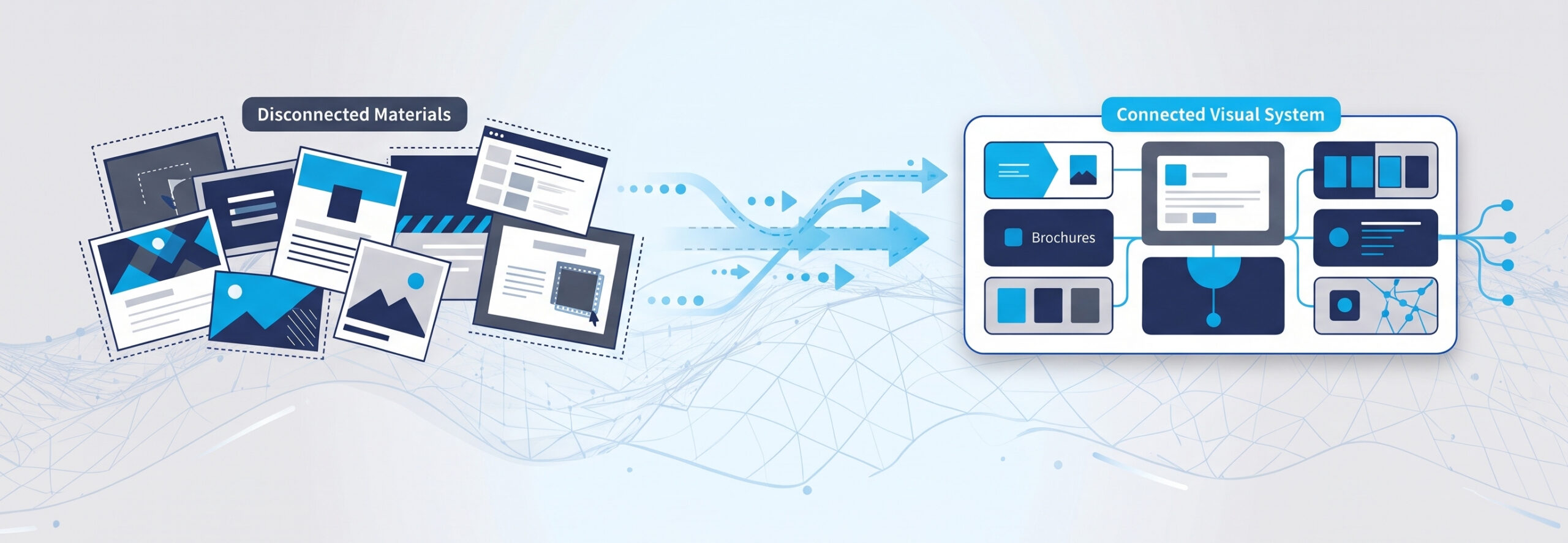
A launch starts with a connected story
Effective B2B product launch strategy connects your offering with buyer understanding and internal execution needed to support it. Creative support then turns that strategy into a system your teams can actually put to work.
Here’s what working from the same narrative can mean:
The goal is to make sure everything moving into the market is working toward the same business objectives. This approach removes execution bottlenecks by turning strategy into creative teams can use—an idea reinforced throughout the brand message guide.
- Buyers encounter a connected story, from start to finish
- Creative production follows a roadmap that reduces disconnected execution
- Launch assets support not just launch day, but also adoption, sales conversations and future go-to-market initiatives
Build the launch around the buyers

Position the product
Define the market-facing story so internal teams and buyers understand and consistently communicate what the product does, why it matters and where it fits.
- Positioning and messaging
- Value propositions
- Audience messaging
- Messaging frameworks

Plan the launch
Turn launch goals into a structured roadmap that connects audiences, channels, milestones and creative priorities.
- Go-to-market planning
- Launch roadmaps
- Content planning
- Creative briefs

Equip sales
Give your account executives and sales teams practical materials for introducing the product, explaining its value and moving buyer conversations forward.
- Sales presentations
- Product sheets
- Battle cards
- Sales playbooks
- Demo videos

Bring the story to market
Build a connected creative system that carries the product story across the touchpoints surrounding launch.
- Launch campaigns
- Product presentations
- Landing page
- Product videos
- Infographics

Extend launch momentum
Create reusable assets and systems that continue supporting the product after the initial launch window.
- Case studies
- Thought leadership
- Sales collateral
- Campaigns
- Ongoing product communications
What changes when launch execution is aligned
The strongest launch strategies make it easier for your organization to move together before, during and after launch. You gain a shared foundation for taking the product to market.
The result is a launch that feels coordinated because the work behind it is coordinated — no last-minute scrambles, no vendor handoffs, no gaps between what was planned and what reaches the market.
 2,000+ projects delivered annually
 4.9/5.0 client satisfaction score*
Trusted by global brands including Visa and Cigna

















Make launch start the momentum
A product launch puts months of strategy, development and internal decision-making into the market. Without a clear story connecting the product, the buyers and the business behind it, even strong ideas can lose impact at the moment they matter most. Build the launch story early, then give your teams the strategy and creative system they need to bring it to market with clarity and consistency.
FAQs
How do you approach B2B product launch strategy?
We start by understanding the product, your business goals, the target buyers and how internal teams need to support the go-to-market effort. Discovery creates a shared plan for coordinating messaging, creative and execution need to come together before production begins.
From there, we help establish the product narrative and translate it into various launch materials. Depending on the engagement, that can include product positioning, launch planning, sales enablement, presentations, content, information design, videos and other launch assets.
The important part is how those pieces connect. Our job is to become students of your business to ensure that the creative reflects the product accurately, supports real buyer decisions and fits the way your organization needs to execute.
What is the “rule of 7” in B2B?
This marketing principle suggests that a prospect may need multiple interactions with a company or message before taking action. Seven should not be treated as a universal requirement, especially in B2B, where buying journeys vary widely based on the industry, product, price, sales cycle and decision-makers.
For product launches, the more useful takeaway is consistency. Buyers may encounter your product through a sales conversation, presentation, event, case study, video or other communication. Each interaction should reinforce the same core product story while giving the buyer information that is appropriate for their buying stage.
What are the steps of a product launch?
A practical launch process generally includes:
- Define the launch goals. Establish what the organization needs the launch to accomplish and how success will be evaluated.
- Understand the market and buyers. Identify the audiences, buyer needs and market context that should shape the launch.
- Develop positioning and messaging. Establish the product story, value proposition and key messages to carry into the market.
- Build the launch plan. Map priorities, milestones, responsibilities and the creative work required to support launch.
- Prepare marketing and sales materials. Develop the presentations, sales tools, content and other assets teams need to communicate consistently.
- Activate the launch. Bring the product story into market across appropriate buyer touchpoints.
- Evaluate and extend. Review performance, gather feedback and refine materials so the initial launch can support longer-term product adoption and sales efforts.
The exact process should fit the product and organization rather than forcing every launch into the same template. Our role is to understand those realities first, then build the strategy and creative system around them.
When should we bring in creative support for a launch?
Earlier is usually better, but there’s no wrong entry point. When we’re involved during positioning and planning, we can support strategy, shape the narrative and coordinate efforts before assets are built — which prevents most late-stage rework. When the strategy is already set and the launch date is close, we focus on getting the creative system and materials built fast and consistently.
What happens to assets after launch day?
The strongest launch assets keep working long after the announcement. Product presentations become foundational sales tools. Creative assets get reworked into ongoing marketing materials. Positioning frameworks guide the next campaign. We build launch systems with that second life in mind, so the investment keeps paying off through adoption and into the next go-to-market cycle.
*Survey conducted by independent consultant